Fritz here, sending this from a library in Northern Ohio as we enter the final week of our month-long RV trip through the Midwest. It’s been a great trip, and we’re enjoying the break from our retirement routine.
While I’m traveling, I wanted to share my favorite article from last month.
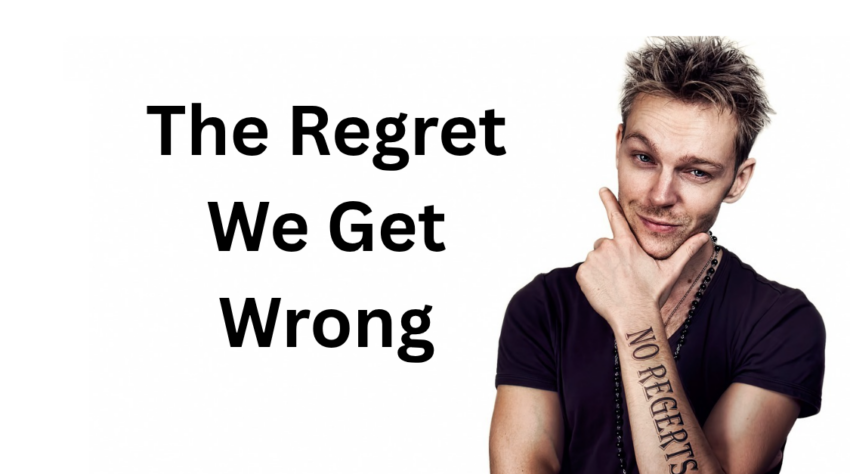
It was written by Jordan Grumet, who is one of the more interesting people I’ve met in the retirement planning space. After years as a medical doctor, he scaled back to focus on hospice work. His work with folks in their final days gives him a perspective that few of us have. It’s influenced his work as a podcaster, author, and speaker. He’s written numerous books, and I’m proud to call him a friend. I encourage you to follow him on his Substack channel. His work has a perspective few can match.
In today’s guest post (originally published here), he shares his thoughts on regrets, based on what he’s witnessed through his hospice work. Here’s a quote from the article:
“And one thing I’ve noticed is this: what people think they’re going to regret is very different from what they actually do.”
Why was it the best article I read last month? Because it offers a perspective very few of us can ever achieve—insight from a hospice doctor on what people really regret in their final days.
There’s a lesson here for all of us.
It’s a powerful post.
I’ve been thinking a lot about regret lately.
That’s not unusual for me. I’m a hospice doctor. I have spent many days sitting with people at the end of their lives, and when you do that long enough, you start to notice patterns. Not just in illness or decline, but in what people say when everything else falls away.
And one thing I’ve noticed is this: what people think they’re going to regret is very different from what they actually do.
Most of us walk around with a quiet fear in the background. It usually sounds something like this: I won’t have enough. Not enough money. Not enough time. Not enough security to eventually do the things that matter.
So we organize our lives around those fears.
We work a little more. Save a little more. Delay a little more.
But sitting at the bedside of the dying, I don’t hear those regrets.
Not once has someone grabbed my hand and said, “I wish I had made two million instead of one.”
No one tells me, “I should have worked more nights. I should have spent more weekends at the office.”
It just doesn’t happen.
Let’s start with money, because it’s the one we tend to obsess over the most.
There’s this belief that we’ll never quite have enough…that no matter how much we earn, it won’t be sufficient to create the life we want. And yet, after years of studying financial independence and watching people pursue it, I’ve come to a different conclusion.
For most people, financial independence is actually possible.
Not for everyone. There are real structural barriers and circumstances that make it incredibly difficult for some. But for many, it’s not out of reach. I’ve seen people with modest incomes build lives of freedom through intentional choices over time.
More importantly, I’ve come to believe that money isn’t the thing we think it is.
We like to imagine it as the end goal—as the thing that will finally make us feel secure, happy, fulfilled. But the data—and more importantly, the stories—don’t really support that. I often think about the Harvard Study of Adult Development, which has followed people for decades and keeps coming back to the same conclusion: what matters most are relationships. Connection. Community.
Not net worth.
And when people are dying, that’s exactly what they talk about. The people they loved. The relationships they nurtured, or didn’t. The moments they shared.
Money barely enters the conversation.
Then there’s time.
This is the other big one. The feeling that life is rushing past us, that we’re too busy, too overwhelmed, too stretched to actually do the things that matter.
We tell ourselves we’ll get to it later. When things calm down. When work is less demanding. When the kids are older. When we finally have space.
But here’s what’s interesting.
If you look at the data, the average person actually has several hours of leisure time a day. It doesn’t always feel that way, but it’s there. And over the course of a lifetime—78, 80, maybe 85 years—that adds up to an enormous amount of time.
More than enough, in fact, to do something meaningful.
The problem isn’t usually that we don’t have time. It’s that we don’t use the time we have in ways that align with what we say is important.
And maybe that’s because something else is getting in the way.
So if it’s not money, and it’s not time…what is it?
When I sit with people at the end of their lives, the regret I hear most often is much quieter. But it’s also much more painful.
It sounds like this:
“I didn’t have the courage.”
The courage to be who I wanted to be.
The courage to say what I needed to say.
The courage to pursue the thing that mattered most to me.
That’s the regret.
Not that they couldn’t.
But that they didn’t.
Courage is a strange thing.
We tend to think of it in big, dramatic terms like heroic acts, bold decisions, life-changing risks. But the kind of courage I hear about at the end of life is usually much smaller. And much more personal.
It’s the courage to have a difficult conversation.
To change careers when something feels off.
To start writing, even if no one reads it.
To prioritize a relationship instead of numbing out in distraction.
It’s the courage to face yourself honestly.
And that’s hard.
Because it means confronting the possibility of failure. Of rejection. Of discomfort. It means letting go of the safety that comes from staying where you are—even if where you are isn’t really working.
In many ways, it’s easier to tell ourselves we don’t have enough time or money. Those are socially acceptable barriers. They make sense. They let us off the hook.
Courage doesn’t.
When I think about my own life, I see this clearly.
The things that have mattered most to me like writing, communicating, and connecting, weren’t limited by money or time. They were limited by my willingness to step into them. To claim them. To risk being bad at them, or misunderstood, or ignored.
And that’s true for most people.
Your thing might not be writing. It might be a relationship, a creative pursuit, a career shift, a way of living that feels more aligned with who you are. I can’t tell you what that is.
But I can tell you this: if you don’t move toward it, it probably won’t be because you lacked time or money.
It will be because it required a kind of courage you weren’t ready to access.
The good news is that courage isn’t fixed.
It’s not something you either have or you don’t. It’s something you build. Slowly. Uncomfortably. Through small, consistent acts of showing up in ways that feel just a little bit scary.
You don’t wake up one day and suddenly become fearless.
You practice.
You say the thing you’ve been avoiding. You take the first step instead of waiting for the perfect moment. You choose intention over autopilot, even when it’s inconvenient.
And over time, that changes you.
If you want to have fewer regrets at the end of your life, I don’t think the answer is to chase more money or somehow find more time.
I think the answer is to build courage. To get better at doing hard things. To get more comfortable being uncomfortable. To become the kind of person who acts on what matters, even when it’s inconvenient or uncertain.
Because in the end, that’s what people wish they had done.
Not more.
Just braver.